In short
- NRCan: a warm attic melts the snow touching the roof, the water refreezes at the cold overhang, and the next melt backs up under the shingles.
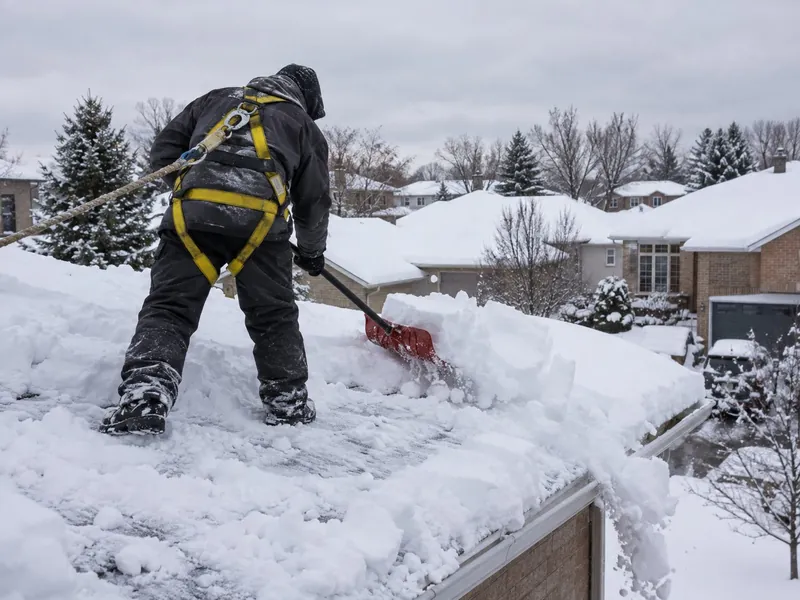
- NRCan says an axe or ice pick damages the roof surface. An Ottawa roofer's post names low-pressure steam as the method that spares shingles.
- We found no published Ottawa or Canadian ice dam price. One US guide puts steam at US$800–$2,400 a job.
- Ottawa's Property Maintenance By-law requires every owner or occupant to keep roofs and surrounding lands free of snow or ice accumulations that might create an accident hazard.
Typical prices in Ottawa
| Job | Typical range | Notes |
|---|---|---|
| Ice dam removal by steam, Ottawa | price is set after a look at the job | We found no published Ottawa or Canadian list |
| Steam removal, US benchmark | US$800–$2,400 a job | One US guide, US dollars, for scale only |
| One-time snow work, Ottawa | $60–$120 an hour | HomeStars Ottawa page, all one-time snow work |
| Roof snow removal, residential | $200–$1,000+ | Canada-wide guide |
| Roof repair in Ottawa | $300–$10,000 | HomeStars Ottawa guide, all repairs, average $1,800 |
Sources. Ice dam prices by method: HomeGuide, How much does ice dam removal cost?, US guide in US dollars (2026), seen 29.10.2026. Ottawa hourly rate: HomeStars, Snow removal pros in Ottawa, cost section, seen 29.10.2026. Roof snow and extra charges: HomeStars, How Much Does Snow Removal Cost?, Canada-wide, updated 21.08.2026, seen 29.10.2026. Roof repair: HomeStars, Roofing Cost Guide for Ottawa, seen 29.10.2026. Causes and quick fixes: Natural Resources Canada, Keeping the Heat In, Section 5: Roofs and attics, part 5.5, seen 29.10.2026, and CAA-Quebec, Ice along the roof edge, citing CMHC, seen 29.10.2026. Steam: one Ottawa roofer’s post on removing roof ice (16.12.2025), seen 29.10.2026. By-law: City of Ottawa, Property Maintenance By-law No. 2005-208, seen 29.10.2026. Gas meters: Enbridge Gas, Keep your gas meter clear, seen 29.10.2026. Contracts: Ontario, Your rights when signing or cancelling a contract, seen 29.10.2026.
How an ice dam forms on an Ottawa house
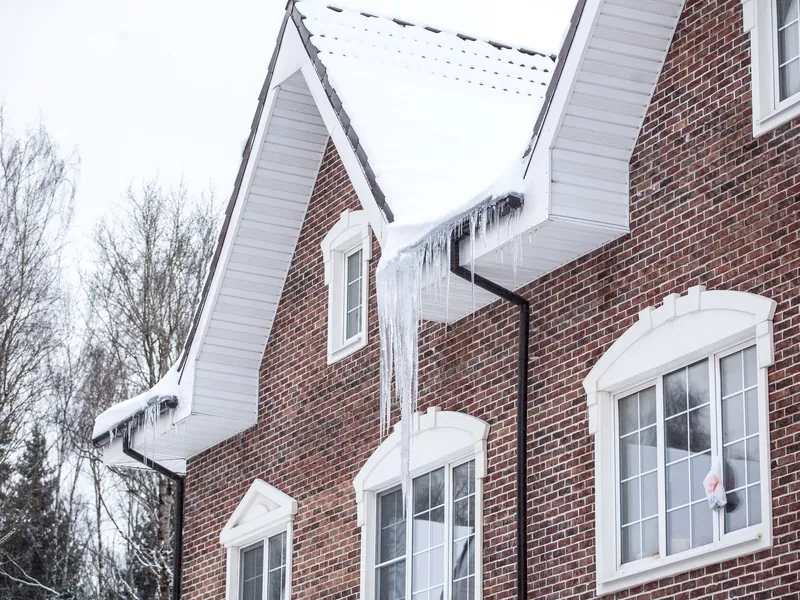
NRCan describes the sequence. Deep snow acts as insulation. An attic above freezing warms the roof deck and melts the snow touching it. The water runs down to the overhang, where the air is below freezing, and freezes. Each melt adds to the ridge, and water behind it backs up under the shingles.
CAA-Quebec, drawing on CMHC, ties ice along the roof edge to poor attic and soffit ventilation. NRCan names the usual hot spots: the knee-wall line of a 1½-storey house, and the roof above a roof-ducted exhaust fan, a plumbing vent, a skylight or a leaky attic hatch.
Steam, chipping or salt: how the methods compare
A US cost guide lays out the methods side by side, in US dollars:
- Steam: US$800–$2,400, about 2–4 hours, US$400–$600 an hour. The guide says steam melts ice without harming shingles.
- Chipping with chisels or hammers: US$800–$1,800, 4–6 hours, risking roof damage.
- Pressure washer: US$400–$2,000, which can harm some roofing materials.
- Salt or melt tablets: US$200–$300, for minor ice only.
Canadian sources add to this. NRCan says an axe or ice pick damages the roof surface; CAA-Quebec warns against sodium chloride on roofing and says the goal is to let water drain. Ask whether the price covers opening channels or clearing the whole eave.
What moves the price
With no published Canadian price, the company sets the figure from your photos or a visit. Five things move it:
- Thickness and length of the ice.
- Height and access. Two-storey eaves, steep pitches and tight side yards add time.
- Snow above the dam. The US guide notes crews may need to clear it first. HomeStars puts residential roof snow removal at $200–$1,000+ across Canada.
- Price basis. HomeStars lists Ottawa one-time snow work at $60–$120 an hour. A crew may bill by the hour or per job.
- Timing and distance. The Canada-wide guide lists emergency call-outs as a higher-priced service and travel fees for properties outside a provider’s standard area.
Other winter prices: snow removal cost guide.
What the quote should list
A useful ice quote names the method and the stretches of eave included. Snow above the ice, cleanup of fallen chunks and any after-hours charge go on separate lines.
Ontario’s consumer guidance names snow removal services among transactions over $50 that should have a written contract. If a written estimate is part of that contract, the final price can go at most 10% above it unless you sign a change. A contract signed at your home carries a 10-day cooling-off period.
Under the eaves: icicles, the gas meter and the steps
CAA-Quebec lists ice breaking off onto people below and, on metal roofs, large sheets sliding off at once. Section 5 of the City’s Property Maintenance By-law requires every owner or occupant to keep roofs and the land around them free of snow or ice accumulations that might create an accident hazard.
Enbridge asks owners to remove large icicles hanging above the gas meter and vents and to leave ice on the meter itself alone. If ice buildup cannot be removed safely, Enbridge asks you to call 1-866-763-5427. For ice on the steps below, see walkway and step clearing and salting.
After the ice comes off: the leak and the cause
Removal ends the backup for now, and the cause stays in the attic. NRCan’s prevention advice is to seal attic air leaks, insulate thoroughly and keep vents clear.
If water reached the ceiling, a roofer may need to check the sheathing and shingles. HomeStars’ Ottawa guide reports roof repairs from a lowest reported $300 to a highest reported $10,000, averaging $1,800.
Who you are dealing with
Ottawa Snow Desk takes your request and passes it to one independent local company that removes roof ice. That company calls you back, looks at the roof or your photos, prices the work and does it.
Questions to ask the company
- Do you melt the ice with low-pressure steam, and which other tools go up on the roof?
- Will you open drainage channels or clear the whole eave, and how much ice is left when you leave?
- Is the price by the hour with a minimum, or a flat price, and is the snow above the ice extra?
- How do you protect the shingles, the eavestroughs, the gas meter and whatever sits below?
- Will you write down any damage or heat-loss signs you see, so a roofer or insulation contractor can follow up?
Have this ready for the call
- Photos from the ground of every stretch of ice, with the icicles and eavestroughs in the frame.
- Photos of any stain, drip or wet ceiling inside, with the date it first appeared.
- The house shape: storeys, dormers, valleys, skylights, a 1½-storey roof or a cathedral ceiling.
- What sits under the ice: front steps, walkway, gas meter, furnace vents, deck, parked car.
- Where a ladder can stand on level ground, and whether a side gate is locked or a dog is in the yard.
Questions people ask
Why does my house get ice dams when the neighbour's does not?
NRCan says a well-sealed, well-insulated attic keeps the roof cool. Roofs with many valleys, dormers or large overhangs are more prone, and dark south-facing siding warmed by the sun can add to it.
Will heating cables stop ice dams?
NRCan says electric heating cables melt channels in the ice and sometimes ease the problem, but they use a significant amount of electricity. CAA-Quebec adds that cables help melt ice along the roof edge and keep meltwater draining. NRCan points to sealing air leaks and insulating as prevention.
My roof has a membrane under the shingles. Can it still leak?
NRCan says building codes require a self-sealing membrane on the lower part of the roof in new houses. The membrane keeps water from leaking through the sheathing, yet ice dams can still form and damage shingles and eavestroughs.
Should the eavestroughs come off for the winter?
NRCan lists it among quick fixes with a drawback: gutters carry roof water away from the foundation.
Does the City care about icicles over my steps?
Section 5 of the Property Maintenance By-law requires every owner or occupant to keep roofs and the surrounding lands free of accumulations of snow or ice that might create an accident hazard. On conviction, the fine runs from $500 to $10,000 for each day or part of a day the offence continues.